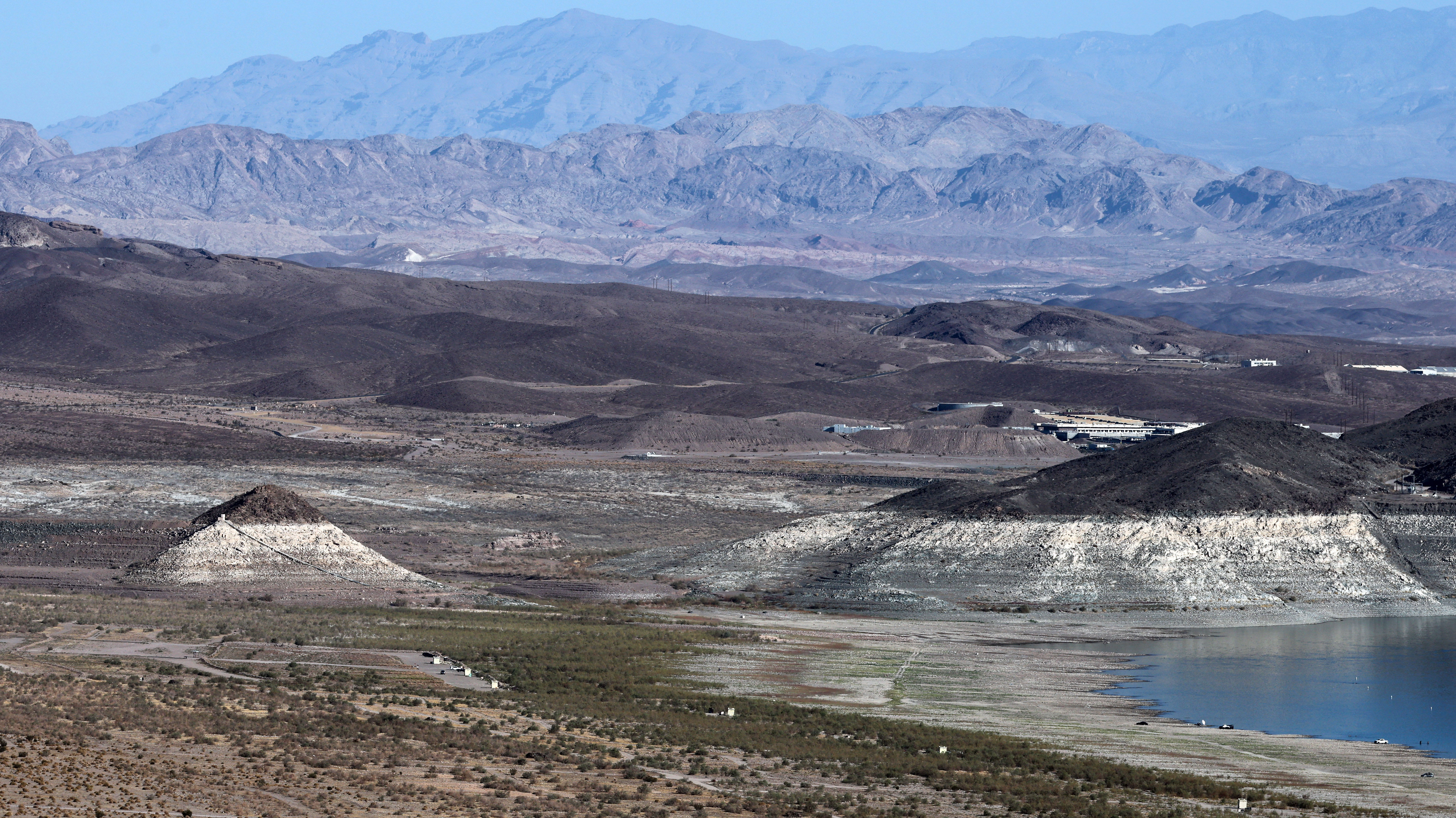
(NEW YORK) -- The water level at Lake Mead, the nation's largest reservoir by storage capacity, hit a record low on Thursday.
Lake Mead's pool elevation hit the new low at 1,040.50 feet, breaking the previous record of 1,040.58 feet set in July 2022, according to data published by the U.S. Bureau of Reclamation on Friday.
The reservoir, formed by the Hoover Dam on the Colorado River, is located in Nevada and Arizona and supplies water to millions of U.S. residents.
Prolonged drought conditions and exceptionally low snowpack have contributed to the significant declines in water levels at several Colorado River Basin reservoirs this year.
Elevation at the nation's second largest reservoir, Lake Powell, was measuring at 3,521.43 feet as of Thursday, according to the Bureau of Reclamation -- nearing the previous record low of 3,519.92 feet set in April 2023 and the critical level needed for the reservoir to produce hydropower. A new record low at the Utah-Arizona reservoir could also be reached this month, projections show.
The Colorado River basin is a critical system for residents in the western U.S. and Mexico. The basin provides water for up to 40 million people and hydropower to the seven basin states: Arizona, California, Colorado, Nevada, New Mexico, Utah and Wyoming, according to the Bureau of Reclamation.
Since the beginning of the year, hydrologists have been warning about the potential for water levels at Lake Mead and Lake Powell to hit critical levels as a result of record-low snowpack over the winter months.
Much of the western U.S. entered the winter already grappling with drought conditions from lack of rain. But warmer-than-normal temperatures during the winter prevented snow from accumulating, which led to a lack of snowmelt flowing into watersheds once spring came.
Copyright © 2026, ABC Audio. All rights reserved.